

Effective May 8, 2026: Building owners in New York City must comply with Local Law 159 of 2025, aimed at preventing and controlling cases of Legionnaires’ disease.
After New York City experienced a large Legionnaires’ disease outbreak in the South Bronx in 2015, the city established new requirements for cooling towers. Local Law 77 of 2015 was enacted and integrated into Title 24 Chapter 8 of the Rules of The City of New York (24 RCNY Chapter 8).
Another Legionnaires’ disease outbreak in Harlem in 2025 prompted the city to pass Local Law 159 of 2025, amending 24 RCNY Chapter 8 with more strict requirements for cooling towers in New York City.
As with any new law, there is a lot of information to assess. The purpose of this page is to help you become familiar with these changes from Local Law 159 of 2025 and understand its potential impact.
Note: Clarity Water Technologies, LLC, is not affiliated with New York City. This page is provided for general informational purposes only and does not constitute legal, regulatory, or engineering advice. While Clarity Water Technologies strives for accuracy, no warranty is made as to completeness or applicability, and users are responsible for verifying current requirements before relying on or implementing any information. Clarity Water Technologies disclaims all liability for any loss or damages arising from use or reliance on this content, to the fullest extent permitted by law. Please consult Local Law 159 of 2025 and 24 RCNY Chapter 8 directly to determine how they pertain to your water systems and facilities.
Clarity Water Technologies specializes in comprehensive industrial and commercial water treatment that includes expert consulting, cutting-edge chemistry, and a full service team that provides mechanical cleaning and water treatment maintenance services. Whatever your facility’s heating, cooling, potable or process application may be, our experts will create a custom water treatment solution for you!
VIEW OUR WEBINAR REPLAY:
Local Law 159 & NYCDOH Legionella Investigations – What Facilities Need to Know
Building owners and operators in New York City: Learn from our water treatment experts about NYC Local Law 159 of 2025 and how it may impact your buildings. In this FREE webinar, we cover changes from the new Local Law 159, what is Legionella and Legionellosis, and DOHMH Outbreak Investigations.
Sign up below and receive a link to view the video replay of this webinar presentation!
Note: You must register using your business email address.
By submitting this form, you consent to allow Clarity Water Technologies to store and process the personal information submitted to fulfill your request(s). We are committed to protecting and respecting your privacy, and will protect your personal information in accordance with our Privacy Policy.
FREE WEBINAR: Local Law 159 & NYCDOH Legionella Investigations – What Facilities Need to Know
Learn from our water treatment experts about Local Law 159 of 2025 and how it may impact building owners. Join us live for a 15 minute presentation!
Two webinar sessions are available:
Friday, August 14 (8am EST)
Tuesday, August 18 (noon EST)
Can’t join us live? Select Video Replay in the dropdown and receive a link to the video replay.
Note: You must register using your business email address.
By submitting this form, you consent to allow Clarity Water Technologies to store and process the personal information submitted to fulfill your request(s). We are committed to protecting and respecting your privacy, and will protect your personal information in accordance with our Privacy Policy. You also consent to Clarity using your information to register you for the selected webinar and send related communications. This webinar will be hosted on Microsoft Teams, and your name and email may be shared with Microsoft to complete the registration.
COMING SOON: NYC Legionella Laws Webinar
Complete the form below and we’ll notify you when our webinars are scheduled.
Clarity’s water treatment experts will be conducting FREE webinars on Local Law 159 of 2025 and how it may impact building owners.
By submitting your email, you consent to receive emails from Clarity about New York Legionella Laws, Clarity’s services, and other marketing information.
Effective May 8, 2026: New York City Council passed Local Law 159 of 2025, which implements new cooling tower requirements for buildings in New York City.
These recent changes to cooling tower rules to tighten timelines, remove ambiguity, and increase enforcement risk.
Key Changes at a Glance:
The biggest shifts for building owners are:
(1) More frequent Legionella testing
(2) Stricter reporting deadlines
(3) Clearer startup/shutdown and no-flow requirements
(4) Stronger recordkeeping/production expectations
(5) Higher penalties
1) Legionella testing is now monthly (not quarterly)
Under the amended rules, owners must ensure Legionella culture testing at least once each month while the cooling tower is in operation, with no more than 31 days between sampling events. This eliminates the flexibility that previously existed when testing was scheduled on a quarterly cadence.
2) Your lab must be NYS ELAP-accredited
The rule change standardizes testing by requiring Legionella samples to be analyzed by a laboratory accredited under New York State’s Environmental Laboratory Approval Program (ELAP). Owners should confirm their vendors and labs meet this requirement before the next sampling event.
3) New 5-day deadline to report Legionella test dates
Owners must now report the date on which Legionella sample testing was conducted within 5 days. Treat this as a recurring compliance clock that starts every time samples are collected.
Practical tip: If your sampling is performed by a vendor, confirm (in writing) who submits the report and how you’ll receive proof of submission within the 5-day window.
4) Startup and shutdown events must be reported within 5 days
The amended rules require owners to notify the Department within 5 days of any cooling tower system startup or shutdown. Make sure your operations team and compliance point-person agree on what counts as a “startup”/“shutdown” for your site.
5) Recordkeeping: 3 years retention remains, but production expectations are stricter
Owners must still retain required cooling tower records for at least 3 years, but the updated language increases the enforcement risk if records can’t be produced when requested. If you cannot provide required records, it may be treated as evidence the records do not exist.
6) Maintenance Program & Plan (MPP) annual certification has additional requirements
The Maintenance Program & Plan is no longer just a document to “have on file.” The amended rules require the MPP to be certified annually by a qualified person and include more operational detail. To be certified, the MPP must be reviewed annually and any necessary changes must be made.
7) Weekly biological monitoring remains—sampling must reflect actual conditions
Weekly bacteriological indicator sampling continues to be required while the tower is in use. The updated wording emphasizes that sampling should be representative of system conditions, not just a box-check at a convenient location or time.
8) Expect tighter, more enforceable corrective-action expectations
The amended rules include detailed response pathways tied to bacteriological indicators and Legionella results, including escalated monitoring, faster notification in higher-result scenarios, and specified remediation actions. Owners should make sure their water treatment provider and on-site team can execute these steps quickly—and that the MPP and logs reflect what was actually done.
9) Startup water source rules are clearer
For commissioning or startup, fill/makeup water must come from a municipal water supply. If you plan to use non potable sources, expect to need a Department approved plan.
10) No-flow periods (3+ days) now trigger required procedures
If your system experiences no circulation for 3 days or more, the rules now call for specified risk management procedures. This is especially relevant for seasonal operations, extended vacancies, or operational changes that create low/no flow conditions.
11) Startup procedures now have defined time windows
Cleaning and disinfection requirements are now tied to defined windows: perform cleaning/disinfection within 15 days before operation, and collect Legionella samples within 3 to 14 days of startup.
12) Definitions expanded and “immediate” replaced with specific timelines
NYC expanded key definitions (e.g., system components, commissioning/decommissioning, operation and operation period) and removed vague terms like “immediate,” replacing them with concrete timeframes (such as 24 hours, 5 days, and 31 days). For owners, that means clearer triggers—and less room for interpretation during enforcement.
13) Penalties increased—late reporting and recordkeeping can cost more
NYC increased monetary penalties and added/expanded violations tied to late reporting, improper water treatment, and recordkeeping/production failures. Even when the technical work is being handled by vendors, the owner remains the party exposed to enforcement risk.
Contact Our Water Treatment Experts and We’ll Be Happy to Answer Any Questions You May Have!
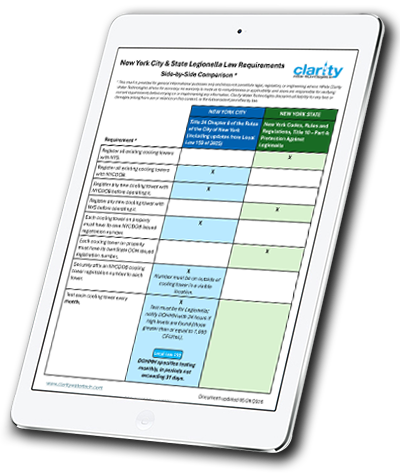
Clarity has put together a side-by-side comparison of the requirements that have been laid out in New York City and New York state Legionella laws. If you own buildings in New York, this simple-to-read chart will help you and your team navigate the Legionella laws that may impact you.
Get Our Free Downloadable Chart Here!
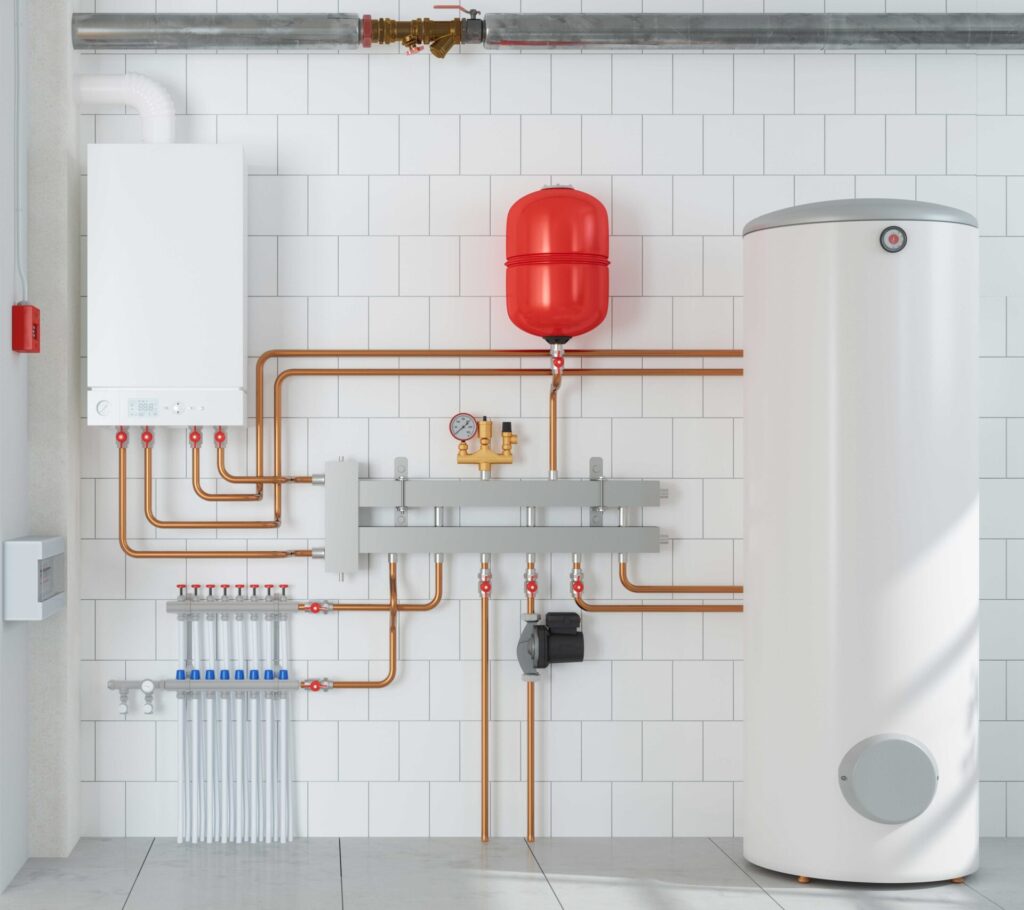
Whether you are impacted by the new law or you want to follow best practices for keeping your water systems safe, it is important to understand what’s included in a water management program. Check out our blog to learn about water management programs, what’s involved in creating one, and links to valuable resources.

Clarity’s water treatment experts will design a custom water treatment program that utilizes the most innovative water treatment technology for a safe, effective solution. Our approach starts with a full evaluation of your facility’s water systems to ensure the solution meets your specific needs. Your custom program will save you more money than it costs by improving the efficiency of your system and lowering your water and energy usage.
Prevent growth of harmful bacteria, improve the efficiency of your cooling system, and keep the metal surfaces of your cooling towers, chillers, heat exchangers, and piping from corroding and developing scale. Our EcoSAFE cooling tower treatment can achieve a 75% reduction of carbon footprint over traditional technologies.
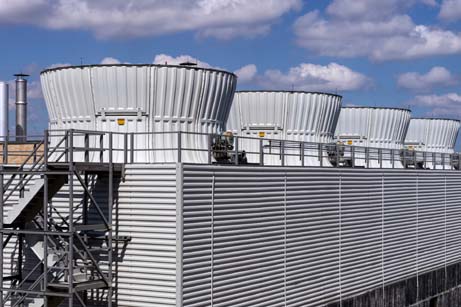
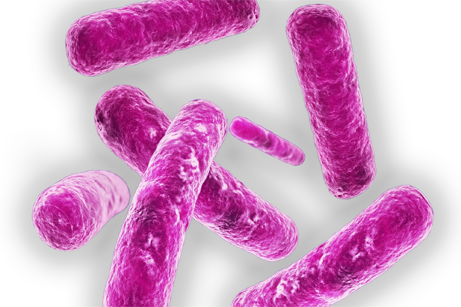
Undertreated water systems can breed harmful bacteria like Legionella. Minimize your risks and liabilities with Clarity’s comprehensive Legionella services. We’ll develop a prevention plan, administer your water treatment, and provide emergency response services if there is ever an issue.
Whether they distribute heated or chilled water, closed loop water systems require proper water treatment to operate effectively and prevent corrosion, scale, and microbiological growth.

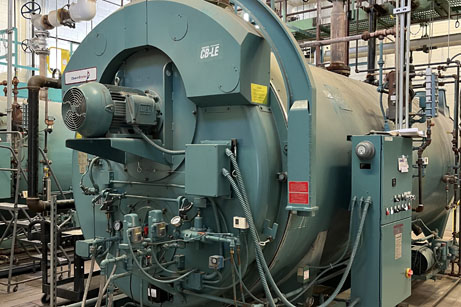
Protect your steam system from scale and corrosion, optimize boiler efficiency, and save on energy and water costs. Our eco-friendly EcoSHIELD chemistry, the most advanced boiler water treatment technology available, bonds with the metal surfaces of steam systems to form a protective barrier.
