

When we meet a facility manager for the first time and discuss their water treatment systems, one question we frequently ask is “if you had a magic wand, what would you like to change here?” They always seem to have a “dream blueprint” of how they would like their mechanical rooms to look and operate, but oftentimes it is not possible due to space restrictions and time, cost, and logistical challenges.
However, a whole host of opportunities open up when there’s a facility upgrade, an expansion, or the construction of a brand new plant. The optimal CUP or mechanical room may become realistic. Everything you want in an ideal plant – automation, equipment backup and redundancy, remote monitoring, space, etc. – can now be explored.
Of course, a project like this can be expensive, time consuming, and sometimes utterly chaotic. It is easy to put off smaller-ticket items like a water treatment station or program for your new cooling tower and centrifugal chiller.
Get Your Water Treatment Right from the Start
We’re here to remind you that there’s no better time than during the planning phase of a new construction project to ensure that your water treatment station and program are set up by the book! Mistakes during this time can lead to problems that drive up project costs and impact deadlines. For the long term, setting up the treatment of your HVAC systems correctly from the beginning will greatly help in maintaining the efficiency and life of your capital cooling equipment.
Talk to a Water Treatment Professional
Getting direction from a qualified water treatment expert like Clarity Water Technologies during the planning phase of your project will be of great help to you. You can discuss what you want out of your water treatment program so that it can be designed accordingly. The fact that you will have a mostly blank slate to work with will make your goals easier to implement. Your water treatment partner can help you communicate your plans to the engineering firm designing your plant and the general contractor responsible for building it.
Ten Things to Consider for Your Water Treatment
So, what are some of the things that need to be addressed in terms of water treatment (well other than “the new tower and chiller need to be treated”)? What follows is by no means everything that needs to be discussed and planned with your water treatment partner for your new project, but it is a good starting point:
- Start with the past. Discuss what has worked well in your existing water treatment program and what has not. What would you like to see continued in the new plant and what do you want eliminated?
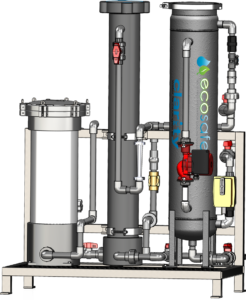
- What else is out there? Now may be the time to learn more about the advancements in water treatment chemistry and monitoring and how it could benefit your facility. Remote monitoring has come a long way the last few years and it may be time to scrap the 10 year old cooling tower conductivity controller for one that can give you a myriad of more options. And don’t forget about our game-changing EcoSAFE solid feed chemistry for cooling towers, which can reduce your cooling tower water treatment footprint by over 75% versus your existing chemistry!
- Complete water analysis. Ensure that your makeup water composition has not drastically changed over the past few years, requiring a new approach, whether it be mechanically or chemically. For example, you may find that the water hardness of your makeup source has elevated to such an extent that installing a makeup water softener would be beneficial for conserving water for your new plant.
- Metallurgy of new equipment and piping systems. Not all cooling towers and chillers are made equally and can be treated equally. If your company is thinking of installing a galvanized cooling tower for your new project and your makeup water does not play well with galvanized metal, you will need to show why spending the extra money now for a stainless steel tower basin would be cheaper than trying to chemically treat and passivate a galvanized one (or even replacing it quicker than intended).
- Account for space. Depending on the size of your cooling system, you will want an adequate amount of space for delivering and possibly transferring chemical drums into storage basins at your chemical feed station. Of course, Clarity’s EcoSAFE solid feed chemistry is a highly-effective way to treat cooling towers without the need for heavy chemical drums, which is especially great for hard to reach towers.
- Feed locations of chemistry. Ideally, neat liquid treatment chemistry should be fed directly into the condenser header going back to the cooling tower to promote better chemical mixing and avoid clogging. There are still quite a few facilities that feed tower chemistry neat into a sidestream piece of piping because they do not have the ability to shut down a system to install welded taps into the header for direct chemical feed. No excuse here not to do it right from the start during construction.
- Drains. You will want to have a good amount of drainage convenient to where your chillers and chemical feed station are for taking down units for inspection/maintenance. This also helps for regular testing and sampling since you can expect some water to be spilled.
- Cleaning and passivation of the piping and equipment. Ensure it is written into the job specification that a thorough flushout, cleaning and passivation of all new piping and equipment is performed before the equipment goes live. Chemical passivation of all wetted material is essential to ensuring long-term chemical protection. In addition, all the welding and construction debris can impede the heat transfer properties of your HVAC system and should be flushed and removed at the end of the construction process.
- Think about the future. Advances in chemical treatment technology occur all the time and it will benefit your new plant to have certain items installed or in place that could take advantage of this down the road. An extra welded tap or two on the condenser line, data line outlets near the tower controller, extra power outlets, etc., may not be needed now but could come in quite handy should an emergency or opportunity arrive.
- Chemical Testing Station. If space allows, having a designated location for the purposes of water treatment testing is highly beneficial. A well-lit area that has plenty of counter top space with a sink is a good place to start. Add room for cabinets to store testing equipment, reagents and glassware for verification of your water treatment program that is more conducive for proper and clean testing than standing over chemical drums and pumps and splashing water everywhere.
- Start with the past. Discuss what has worked well in your existing water treatment program and what has not. What would you like to see continued in the new plant and what do you want eliminated?
- What else is out there? Now may be the time to learn more about the advancements in water treatment chemistry and monitoring and how it could benefit your facility. Remote monitoring has come a long way the last few years and it may be time to scrap the 10 year old cooling tower conductivity controller for one that can give you a myriad of more options. And don’t forget about our game-changing EcoSAFE solid feed chemistry for cooling towers, which can reduce your cooling tower water treatment footprint by over 75% versus your existing chemistry!
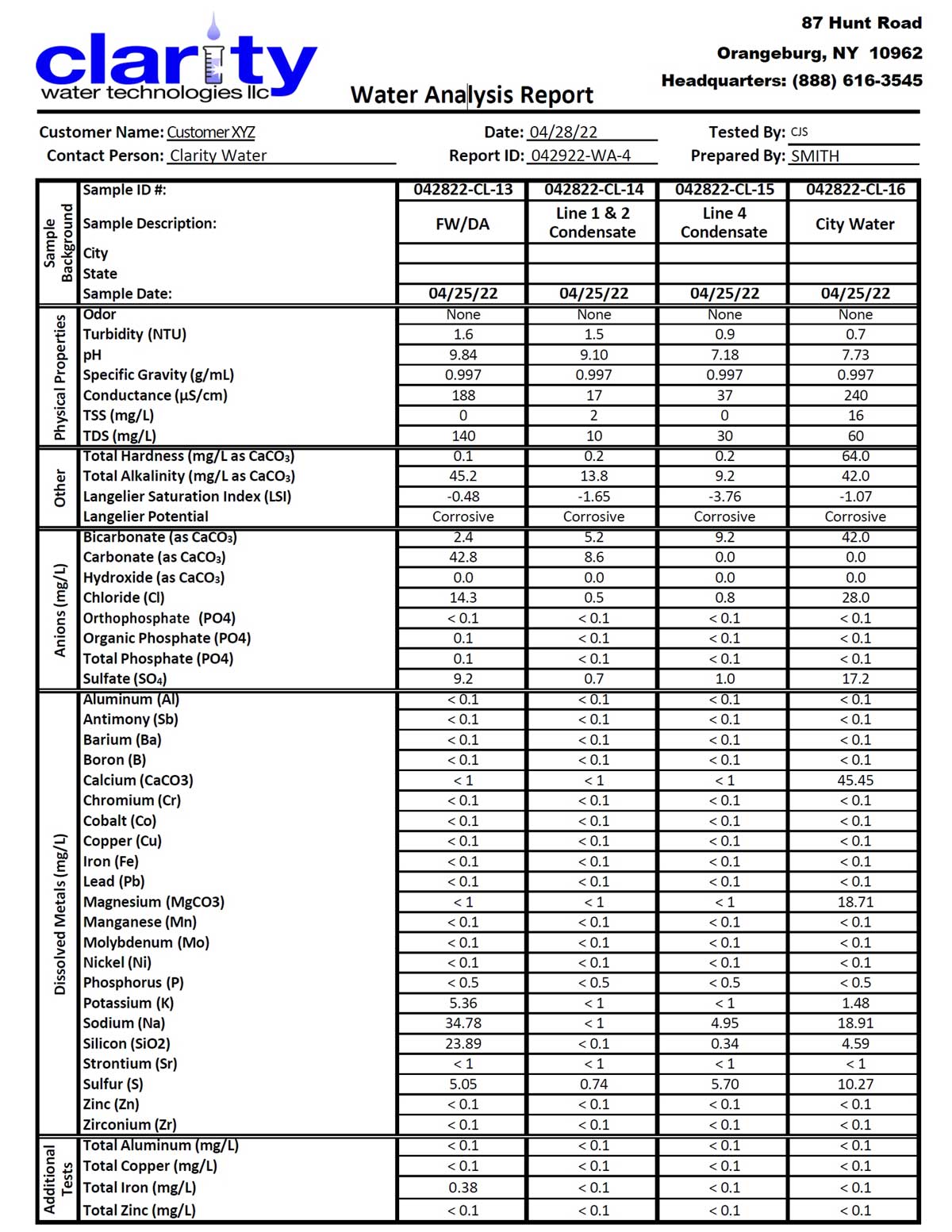
- Complete water analysis. Ensure that your makeup water composition has not drastically changed over the past few years, requiring a new approach, whether it be mechanically or chemically. For example, you may find that the water hardness of your makeup source has elevated to such an extent that installing a makeup water softener would be beneficial for conserving water for your new plant.
- Metallurgy of new equipment and piping systems. Not all cooling towers and chillers are made equally and can be treated equally. If your company is thinking of installing a galvanized cooling tower for your new project and your makeup water does not play well with galvanized metal, you will need to show why spending the extra money now for a stainless steel tower basin would be cheaper than trying to chemically treat and passivate a galvanized one (or even replacing it quicker than intended).
- Account for space. Depending on the size of your cooling system, you will want an adequate amount of space for delivering and possibly transferring chemical drums into storage basins at your chemical feed station. Of course, Clarity’s EcoSAFE solid feed chemistry is a highly-effective way to treat cooling towers without the need for heavy chemical drums, which is especially great for hard to reach towers.
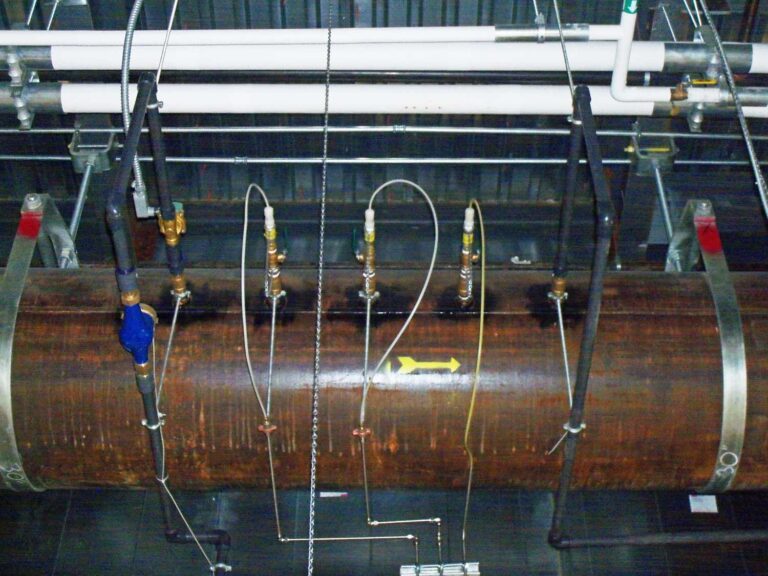
- Feed locations of chemistry. Ideally, neat liquid treatment chemistry should be fed directly into the condenser header going back to the cooling tower to promote better chemical mixing and avoid clogging. There are still quite a few facilities that feed tower chemistry neat into a sidestream piece of piping because they do not have the ability to shut down a system to install welded taps into the header for direct chemical feed. No excuse here not to do it right from the start during construction.

- Drains. You will want to have a good amount of drainage convenient to where your chillers and chemical feed station are for taking down units for inspection/maintenance. This also helps for regular testing and sampling since you can expect some water to be spilled.
- Cleaning and passivation of the piping and equipment. Ensure it is written into the job specification that a thorough flushout, cleaning and passivation of all new piping and equipment is performed before the equipment goes live. Chemical passivation of all wetted material is essential to ensuring long-term chemical protection. In addition, all the welding and construction debris can impede the heat transfer properties of your HVAC system and should be flushed and removed at the end of the construction process.
- Think about the future. Advances in chemical treatment technology occur all the time and it will benefit your new plant to have certain items installed or in place that could take advantage of this down the road. An extra welded tap or two on the condenser line, data line outlets near the tower controller, extra power outlets, etc., may not be needed now but could come in quite handy should an emergency or opportunity arrive.
- Chemical Testing Station. If space allows, having a designated location for the purposes of water treatment testing is highly beneficial. A well-lit area that has plenty of counter top space with a sink is a good place to start. Add room for cabinets to store testing equipment, reagents and glassware for verification of your water treatment program that is more conducive for proper and clean testing than standing over chemical drums and pumps and splashing water everywhere.
Partner With Clarity On Your Next Project
As we all know too well, a little planning now can save a lot of headaches – and costs – later on!
If you have any questions or need assistance with your project, just contact our team of water treatment experts and we’ll be happy to help! We have extensive experience partnering with chief estimators, project managers, and project teams on mechanical and new construction projects. Clarity also offers our proprietary technology, EcoSAFE, a cutting-edge solid feed water treatment for cooling towers that is simple, safe, effective, and eco-friendly.
Good luck!
